Is It Too Late to Sell a Bowling Green Home in 2026?
.png?w=128&h=128)
Leigh Ann Parkinson
No pressure, no pretense, and no recycled advice — whether you're selling, buying, or figuring out which comes first...
No pressure, no pretense, and no recycled advice — whether you're selling, buying, or figuring out which comes first...
By late August, it’s easy to assume you’ve missed the best time to sell. Spring has come and gone, school is back in session, and waiting until next year can start to sound like the obvious choice.
But Bowling Green’s current housing market tells a more nuanced story.
The short answer: No, it isn’t necessarily too late. As of August 25, 2026, Bowling Green’s market still leans toward sellers overall, although market time and conditions vary considerably by price segment. And having spent more than 25 years as a real estate appraiser, I tend to look at the individual market around a home rather than rely on a broad headline. There simply isn’t one “best” time to sell every Bowling Green property.
Whether it makes sense to sell before 2027 depends less on the calendar—and more on where your home fits within the market and how it’s prepared and marketed.
What Bowling Green’s Current Housing Market Shows
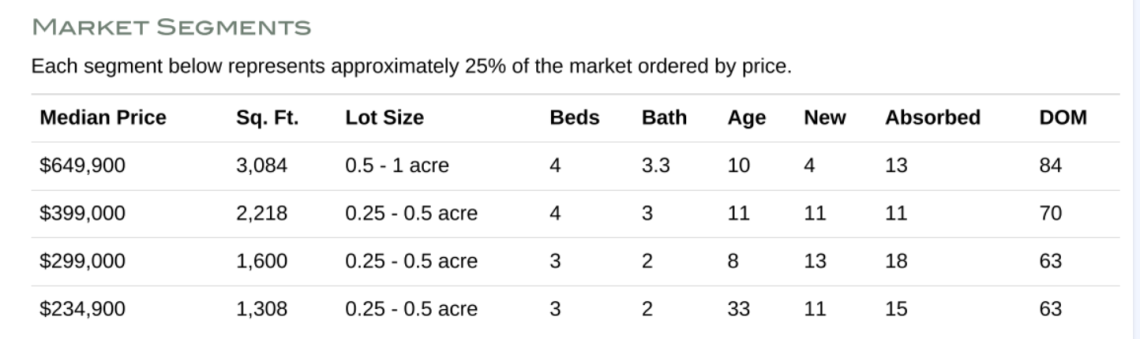
Altos Research divides the Bowling Green housing market into four similarly sized segments based on price. The median prices of those segments are approximately $234,900, $299,000, $399,000, and $649,900.
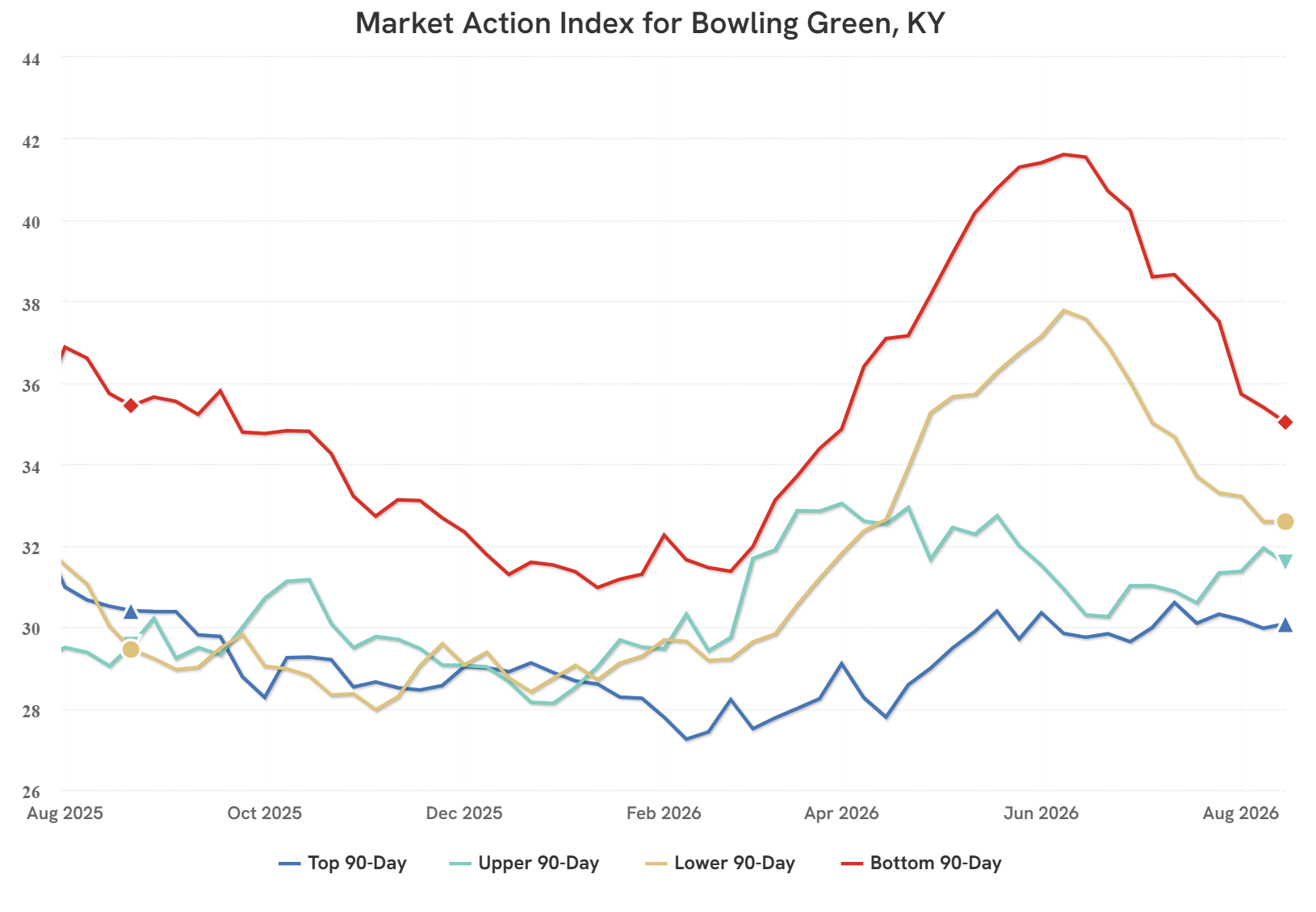
The Market Action Index, or MAI, measures the current balance between supply and demand. Unlike closed-sales data, which tells us what happened weeks or even months ago, the MAI gives us a more immediate look at current market conditions.
A reading above 30 generally favors sellers, while a reading below 30 favors buyers.
Right now, Bowling Green’s readings range from approximately 35 in the lowest-priced segment to 30.1 in the highest. The market still leans toward sellers overall, but that advantage becomes smaller as prices rise.
.png?w=1140)
Current market times also vary by segment. The two lower-priced segments each show 63 days on market, compared with 70 days in the next segment and 84 days in the highest-priced segment.
That doesn’t make one segment good and another bad. It simply means sellers should have different expectations about timing depending on where their home fits within the market.
Interest Rates Could Change the Fall Market
Mortgage rates are another piece of the picture. After rising from about 6% in early March, the national average 30-year fixed rate reached a one-year high of 6.69% in early August before easing slightly.
If rates continue to fall later this year, some buyers who have been waiting may decide it’s time to start looking again. That could bring more demand to the fall and winter market than we would normally expect. Of course, interest rates have never been especially considerate about following anyone’s forecast.
The best strategy will vary by price segment.
There May Be Less Competition Than You Think
Spring usually brings more buyers—but it also brings more listings. By late summer, some of those competing homes have already sold, expired, or been taken off the market.
What matters most isn’t the total number of homes for sale across Bowling Green. It’s the number of comparable homes competing with yours in the same price range and location.
That’s why two sellers can list at the same time and have very different experiences.
Preparing for a Fall or Winter Sale
A fall listing doesn’t need to be rushed, but photography is worth planning ahead.
Exterior photographs taken while the landscaping is still green—or later when the leaves change—will usually serve a listing better than bare trees and short winter light. Photos can also be taken in advance if you know you’ll be selling later.
I use this approach when sellers aren't sure when they want to go on the market. If you're thinking of selling in winter or early 2026, the fall color gives some opportunities for stunning photography and video.
How to Choose the Right Time to List Your Home
The right listing date depends on what comes after the sale. If you’re buying another home, moving for work, coordinating with a lease, or trying to avoid carrying two properties, those details may matter more than the difference between an August and November launch.
Consider how much flexibility you have around showings, closing, and your next move. A seller who needs a very specific closing date may approach offers differently from someone who can move at any point over several weeks. If you also need to buy, it helps to understand your financing and the available homes before deciding when to list.
Waiting has its own consequences. Another year may bring changes in home prices, interest rates, competition, carrying expenses, and your personal plans. None of those changes can be predicted with certainty. Before you wait, compare what a move would look like now with what waiting asks of you.
The Bottom Line
The right timing depends on the home’s price segment, its competition, its condition, and—just as importantly—the seller’s own plans.
The current data doesn’t suggest that Bowling Green’s housing market has shut down for the year. It suggests that sellers need to understand the particular market they’re entering and set their expectations accordingly.
If selling has crossed your mind, what would you want to know before deciding whether to move forward?